


Illuminated Manuscripts
- 400 -
“Printing” during medieval Europe was in the form of illuminated manuscripts. These manuscripts were completely handwritten, and were copied in complete silence by devoted monks. The books were exceedingly ornate, and it was an incredibly slow and error-ridden process. They were often so expensive that only the richest nobles could afford them. (Source.)
Wood-Block Printing
- 900 -
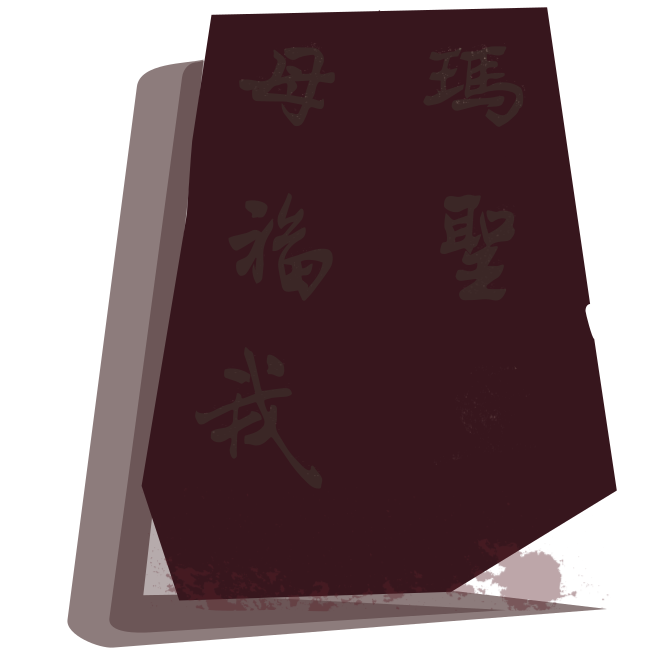
Long before the invention of the the letterpress and moveable type, the Chinese invented woodblock printing. To create a page for a book, artisans would painstakingly carve characters into a wooden printing block and then stamp it onto the parchment. Even though the carving process was very time consuming, it allowed over 1000 sheets to be printed a day -- a number the rest of the world could only dream of.
Gutenberg
- 1440 -
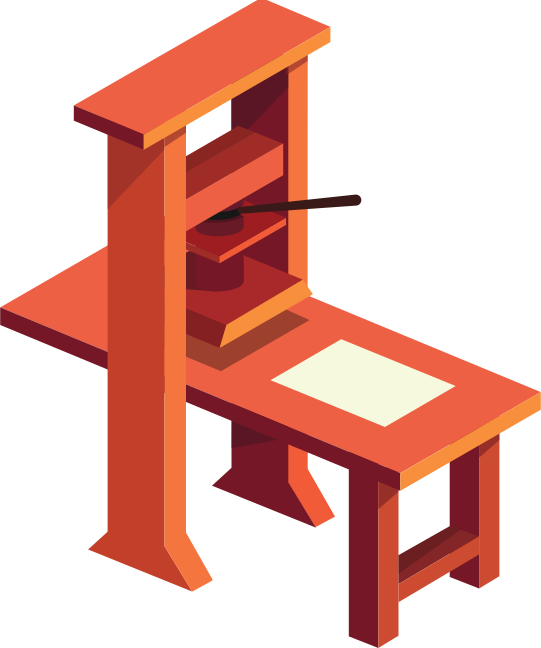
In 1440 a German named Johannes Gutenberg decided to mix things up in the printing world. When he saw how expensive and time-consuming it was to scribe books, he decided to come up with a better way to copy text. Using plain farming technology (the screw press) he invented the very first printing press, a system that allowed text to be moved, re-used, and printed faster than ever before. (Source.)
Rotary Press
- 1843 -
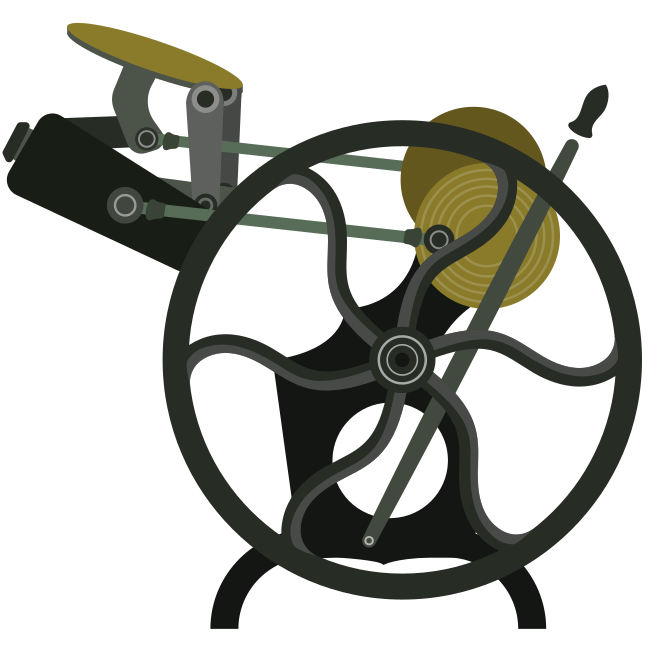
He is most well known for his invention in 1843 of a rotary printing press: type was placed on a revolving cylinder, a design that could print much faster than the old flatbed printing press. though Mr.hoe was known for his rotary printing press, he also had lots of practice before, since he took on his fathers work after he retired, he perfected many cylinder presses, and he continued to improve, eventually creating his prize invention, the hoe lightning press

Offset Printing
- 1900 -
By 1850 it was becoming laborious for printers to store the thousands of heavy lead letters needed for printing. A solution was needed. Thus, the process of Lithography, and also it's near cousin, Offset printing was invented. Like many great inventions, Offset printing was created completely by accident, when a man forgot to put paper into his printing press. However this odd beginning didn't stop it from rising to the top and remaining a favorite for over 7 decades.

Screen Printing
- 1960 -
Screen printing involves creating a stencil called a ‘screen’, and then using that stencil to apply layers of ink on the printing surface. Each color is applied using a different stencil, one at a time, until combined together they create cohesive beautiful works of art.

Modern Printing
- 2000 -
The printing press has evolved greatly through years, and today it takes all forms. Digital printing has become the primary method of printing in the world. Also commonly used in print shops are offset printing and polymer plates. Recently however, traditional methods of printing have experienced renewed interest. Artists everywhere are falling back in love with the nostalgic textures, colors, and minimalism of the classic printing press.